

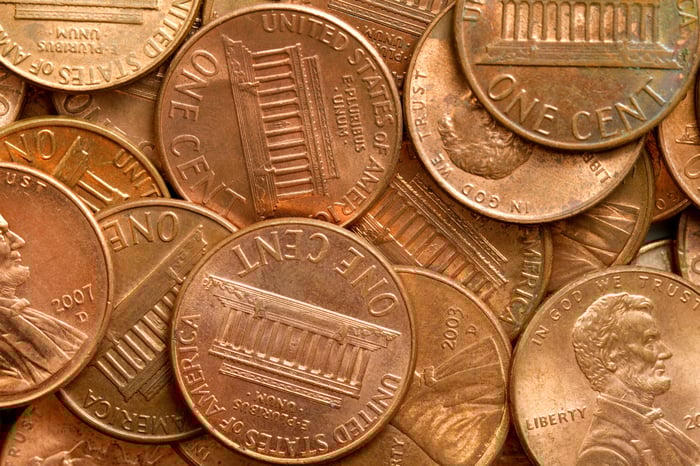

Timeline of the U.S. Penny
1793: Penny Introduced - The first U.S. one-cent coin (penny) was produced shortly after the Coinage Act of 1792 established the U.S. Mint.
1857: Half-Cent Discontinued - The half-cent coin (worth 0.5¢) was discontinued by the Coinage Act of 1857. The penny itself continued.
Early 2000s–2020s: Longstanding Debate - For years, economists, lawmakers, and officials discussed that the penny costs more to produce than it is worth and is increasingly irrelevant due to declining cash use.
February 9, 2025: Presidential Directive - President Donald Trump directed the Secretary of the Treasury to stop producing new pennies, citing rising production costs and inefficiency.
May 2025: Final Order of Penny Blanks - The U.S. Treasury placed its final order for penny blanks (the metal discs used to mint pennies).
November 12, 2025: Final Pennies Made -The U.S. Mint officially ended production of the penny after more than 230 years. The last pennies were struck at the Philadelphia Mint, marking the end of new penny production.
Early 2026: Banks Unable to Supply Pennies Consistently - Crews Bank & Trust and other financial institutions' ability to order penny shipments from the Federal Reserve is limited. As a result, banks may no longer be able to accommodate orders for rolled pennies.

How Businesses May Be Affected
Since the U.S. Mint stopped producing pennies, their circulation has continued to decline. The Federal Reserve has reduced penny shipments to many coin distribution centers, resulting in limited supplies. While pennies remain legal tender, they are becoming increasingly difficult to obtain This affects all Crews Bank & Trust branches, as well as banks across the country.
If you require penny rolls, please be aware that availability may be limited or unavailable, depending on local inventory.
Businesses may choose to round cash transactions up or down to the nearest nickel when exact change is unavailable. Any rounding policy should be clearly disclosed before a customer completes a purchase. Employees should be trained and provided with talking points to explain the business’s policy. In addition, rounding practices should be documented in point-of-sale systems and reflected on receipts whenever possible.
Please note that sales tax must continue to be calculated precisely on the full taxable amount prior to any rounding.
Transactions made with credit or debit cards, ACH payments, or other electronic payment methods may continue to be processed for the exact amount, without rounding.
Businesses are encouraged to monitor applicable regulations and consult with a tax advisor as needed.
.jpg?width=1920&height=1048&name=jonas-leupe-raWzvTTCBD8-unsplash%20(1).jpg)