Chart of the Day: How High Sales Tax by State?
Contents
About the Author

Thinking about your family's future? Attend one of our upcoming Trust Seminars and learn how thoughtful planning can make a lasting difference. Register here.
Investments are not FDIC insured, not deposits, and may lose value.
FDIC-Insured - Backed by the full faith and credit of the U.S. Government
BankFind
This bank is insured by the Federal Deposit Insurance Corporation. The FDIC Certificate ID is 8021. Click on the Certificate ID # to confirm this bank's FDIC coverage using the FDIC's BankFind tool.
EDIE
EDIE lets consumers and bankers know, on a per-bank basis, how the insurance rules and limits apply to a depositor's accounts-what's insured and what portion (if any) exceeds coverage limits at that bank. Check your deposit insurance coverage >>



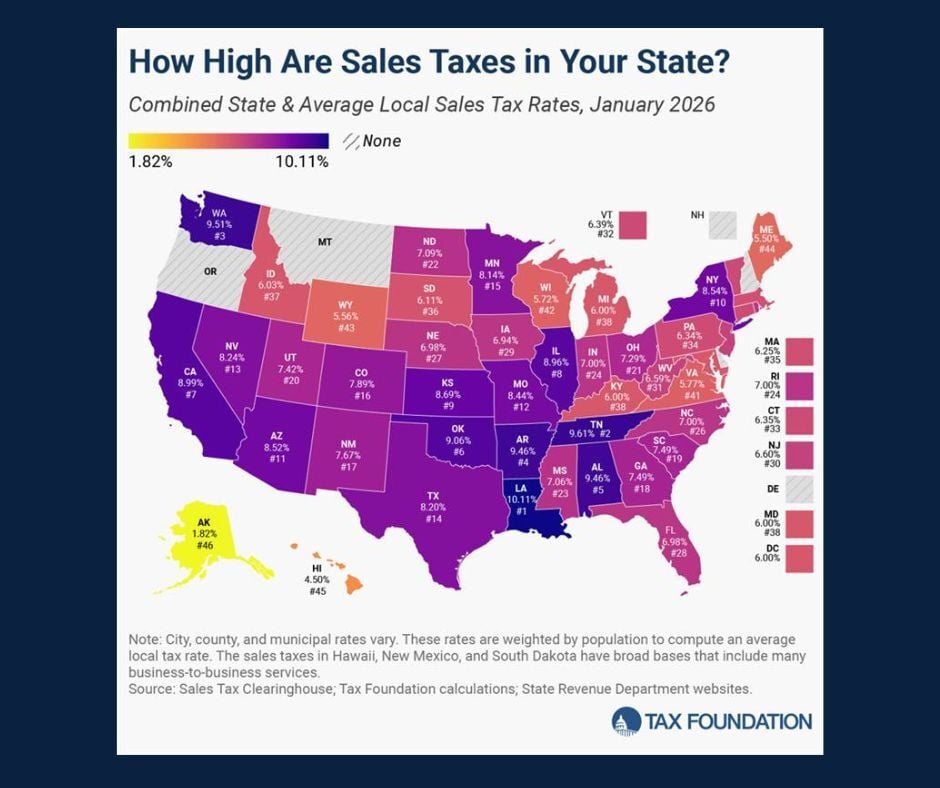
Today’s Chart of the Day from the Tax Foundation’s "2026 Sales Tax Rates | Sales Taxes by State" highlights combined state and local sales tax rates across the country, illustrating how much consumers pay in taxes on everyday purchases depending on where they live.
Louisiana tops the list with the highest combined sales tax rate at 10.11%, followed by Tennessee and Washington. At the other end of the spectrum, Delaware, Montana, New Hampshire, and Oregon remain the only states with no statewide sales tax.
While sales tax is only one component of a state's overall tax burden, it can have a meaningful impact on household spending over time. Understanding the tax environment where you live (or where you plan to retire) can help inform budgeting, relocation decisions, and long-term financial planning.
John joined Crews Bank & Trust as a Trust Investment Associate in September 2025 and was promoted to Portfolio Manager in 2026. He holds a Bachelor of Science in Business Administration with a focus in Finance and Banking from the University of Missouri, along with an Investment Certificate. In his role, he supports portfolio maintenance and analysis while helping clients work toward their financial goals.
Investments are not a deposit or other obligation of, or guaranteed by, the bank, are not FDIC insured, not insured by any federal government agency, and are subject to investment risks, including possible loss of principal. Past performance is not indicative of future results.