Chart of the Day: Overconfidence Bias
Contents
About the Author

Buying a home? Check out our great rates. Terms and conditions apply. Loans subject to credit approval. NMLS #406389
FDIC-Insured - Backed by the full faith and credit of the U.S. Government
BankFind
This bank is insured by the Federal Deposit Insurance Corporation. The FDIC Certificate ID is 8021. Click on the Certificate ID # to confirm this bank's FDIC coverage using the FDIC's BankFind tool.
EDIE
EDIE lets consumers and bankers know, on a per-bank basis, how the insurance rules and limits apply to a depositor's accounts-what's insured and what portion (if any) exceeds coverage limits at that bank. Check your deposit insurance coverage >>



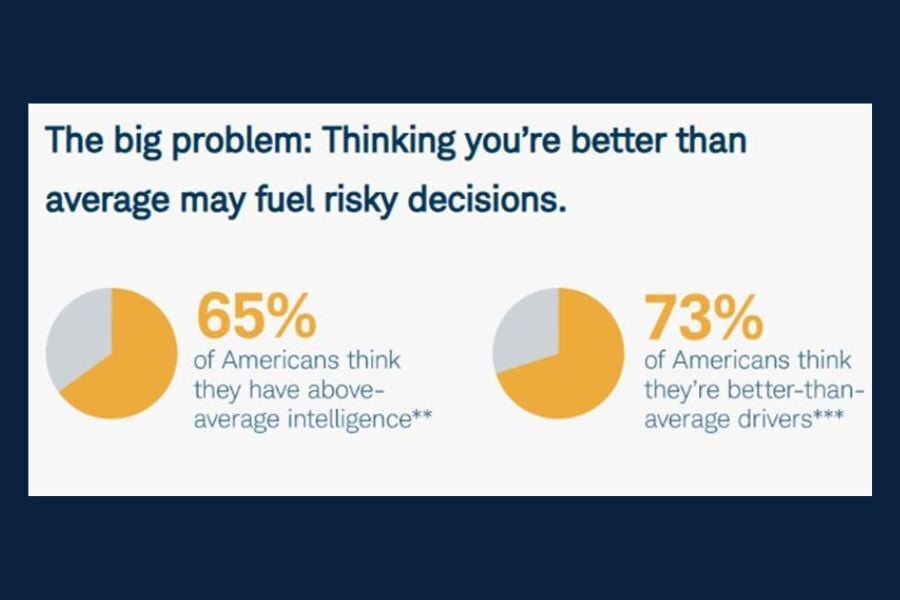
Today’s Chart of the Day from Schwab Asset Management's blog, Overconfidence bias, highlights a well-known concept in behavioral finance: overconfidence bias, or our tendency to think we’re better at things than we actually are.
In the investing world, overconfidence can be costly. Investors who believe they have above-average skill may take on unnecessary risks, try to time the market, or heavily concentrate their portfolios in speculative investments.
To show how common this bias is, today’s chart looks at two things most people have strong opinions about: their intelligence and their driving ability. If people viewed themselves objectively, the results would be closer to a 50/50 split. Instead, the majority rate themselves above average, a reminder that confidence often comes a little easier than self-awareness.
John joined Crews Bank & Trust as a Trust Investment Associate in September 2025. He holds a Bachelor of Science in Business Administration with a focus in Finance and Banking from the University of Missouri, along with an Investment Certificate. In his role, he supports portfolio maintenance and analysis while helping clients work toward their financial goals.
Investments are not a deposit or other obligation of, or guaranteed by, the bank, are not FDIC insured, not insured by any federal government agency, and are subject to investment risks, including possible loss of principal. Past performance is not indicative of future results.