Chart of the Day: Post-Pandemic Wealth Migration
Contents
About the Author

Buying a home? Check out our great rates. Terms and conditions apply. Loans subject to credit approval. NMLS #406389
FDIC-Insured - Backed by the full faith and credit of the U.S. Government
BankFind
This bank is insured by the Federal Deposit Insurance Corporation. The FDIC Certificate ID is 8021. Click on the Certificate ID # to confirm this bank's FDIC coverage using the FDIC's BankFind tool.
EDIE
EDIE lets consumers and bankers know, on a per-bank basis, how the insurance rules and limits apply to a depositor's accounts-what's insured and what portion (if any) exceeds coverage limits at that bank. Check your deposit insurance coverage >>



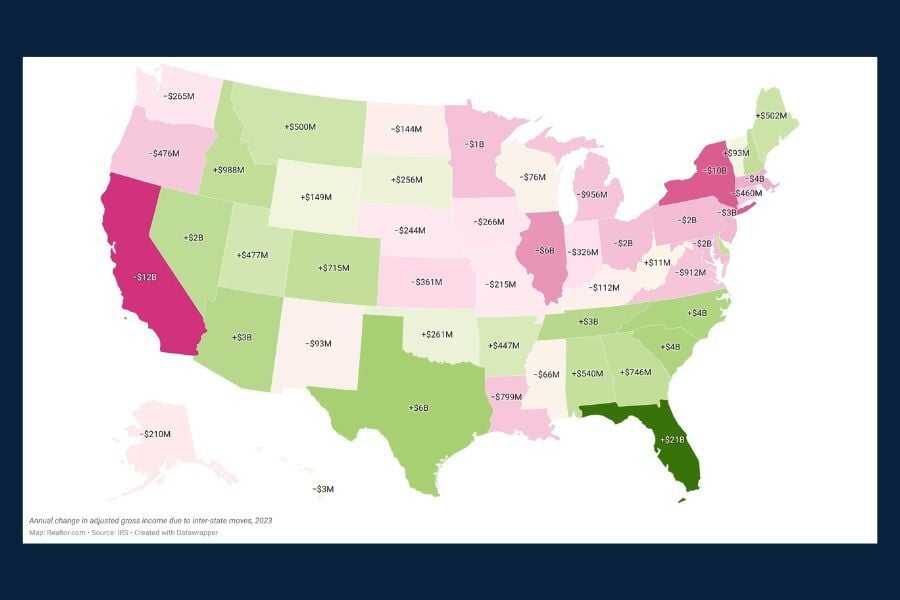
Today’s Chart of the Day, sourced from the article "New Map Shows Extent of Post-Pandemic Wealth Migration", found on Realtor.com, gives a snapshot of how money has moved around the country since the pandemic.
Florida clearly stands out, seeing the largest gain in relocated wealth at roughly $21 billion, while California and other high-cost states saw money move out instead.
A big reason behind this shift is the appeal of lower taxes and more affordable living. Many households are also prioritizing lifestyle factors like more space and a slower pace of life as they rethink where they want to put down roots.
At the same time, increased new home construction across the Southeast and Rocky Mountain regions has made it easier and more affordable for people to relocate.
John joined Crews Bank & Trust as a Trust Investment Associate in September 2025 and was promoted to Portfolio Manager in 2026. He holds a Bachelor of Science in Business Administration with a focus in Finance and Banking from the University of Missouri, along with an Investment Certificate. In his role, he supports portfolio maintenance and analysis while helping clients work toward their financial goals.
Investments are not a deposit or other obligation of, or guaranteed by, the bank, are not FDIC insured, not insured by any federal government agency, and are subject to investment risks, including possible loss of principal. Past performance is not indicative of future results.