Chart of the Day: Types of Fraud
Contents
About the Author

Buying a home? Check out our great rates. Terms and conditions apply. Loans subject to credit approval. NMLS #406389
FDIC-Insured - Backed by the full faith and credit of the U.S. Government
BankFind
This bank is insured by the Federal Deposit Insurance Corporation. The FDIC Certificate ID is 8021. Click on the Certificate ID # to confirm this bank's FDIC coverage using the FDIC's BankFind tool.
EDIE
EDIE lets consumers and bankers know, on a per-bank basis, how the insurance rules and limits apply to a depositor's accounts-what's insured and what portion (if any) exceeds coverage limits at that bank. Check your deposit insurance coverage >>



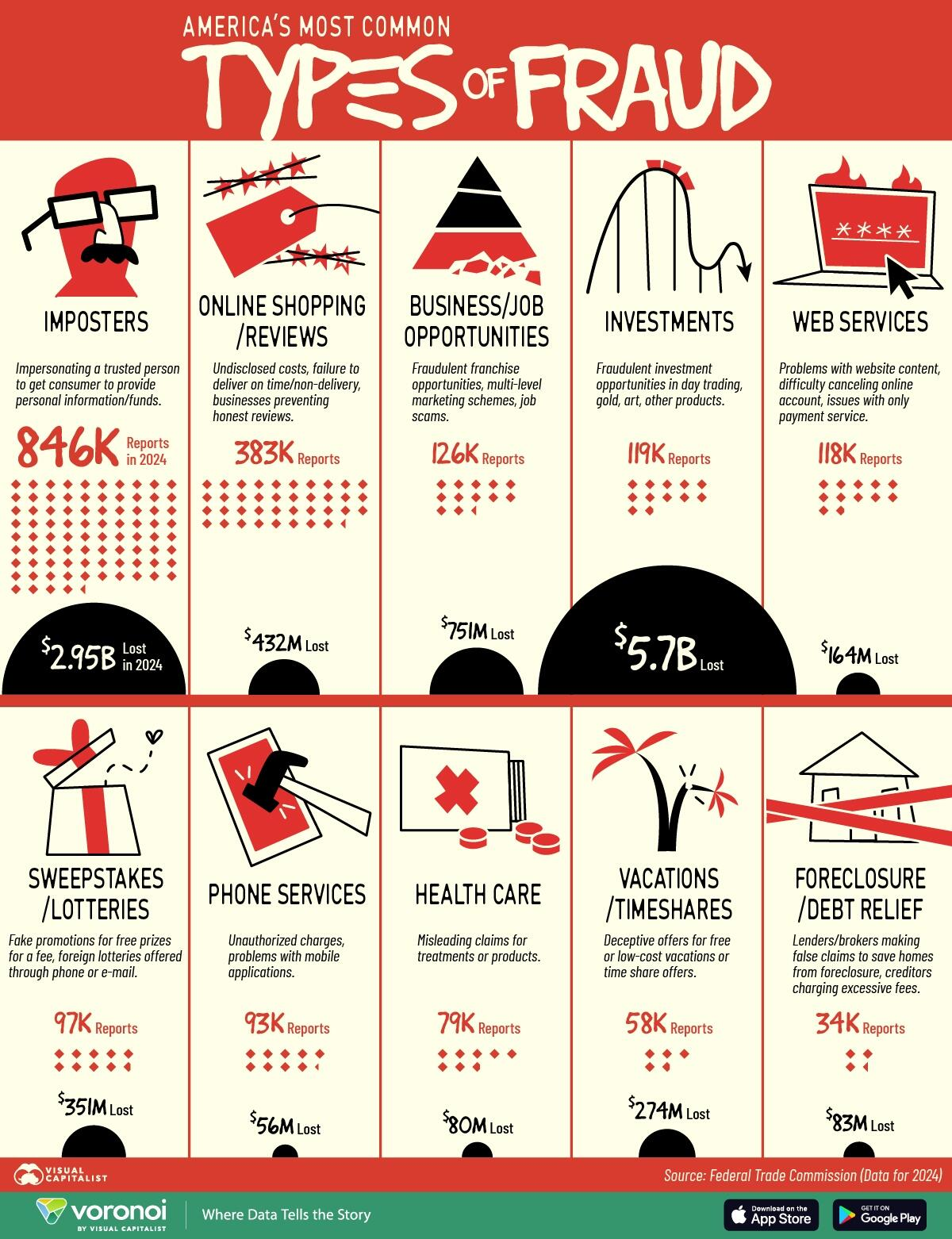
Today’s Chart of the Day is from Visual Capitalist detailing and ranking common types of fraud. The report suggests losses are half a trillion dollars annually, which works out to $1,500 per adult in the US.
The category with the most reported incidents is “Imposters,” where a fraudster acts as a trusted person to get a victim to provide personal information or funds.
However, the one that stands out to me is the “Investments” fraud category, which accounts for the greatest financial losses by a wide margin with a median loss of $9,000 per incident.
My advice? Trust your gut, go slow, and reach out to your friendly banker who receives training each year to identify and catch fraud before it's too late.
Experienced professionals from our wealth management services team can help you achieve a bright financial future through investment strategies tailored to you. We’ll show you all of the options available and help you choose the ones best suited to you. We’ll provide high-quality, personal service as we work toward your goals together. Our Portfolio Managers do not receive commissions on trades; our recommendations of investments are based solely on your best interests.
Investments are not a deposit or other obligation of, or guaranteed by, the bank, are not FDIC insured, not insured by any federal government agency, and are subject to investment risks, including possible loss of principal.