Chart of the Day: Largest Source of Federal Revenue
Contents
About the Author

Buying a home? Check out our great rates. Terms and conditions apply. Loans subject to credit approval. NMLS #406389
FDIC-Insured - Backed by the full faith and credit of the U.S. Government
BankFind
This bank is insured by the Federal Deposit Insurance Corporation. The FDIC Certificate ID is 8021. Click on the Certificate ID # to confirm this bank's FDIC coverage using the FDIC's BankFind tool.
EDIE
EDIE lets consumers and bankers know, on a per-bank basis, how the insurance rules and limits apply to a depositor's accounts-what's insured and what portion (if any) exceeds coverage limits at that bank. Check your deposit insurance coverage >>



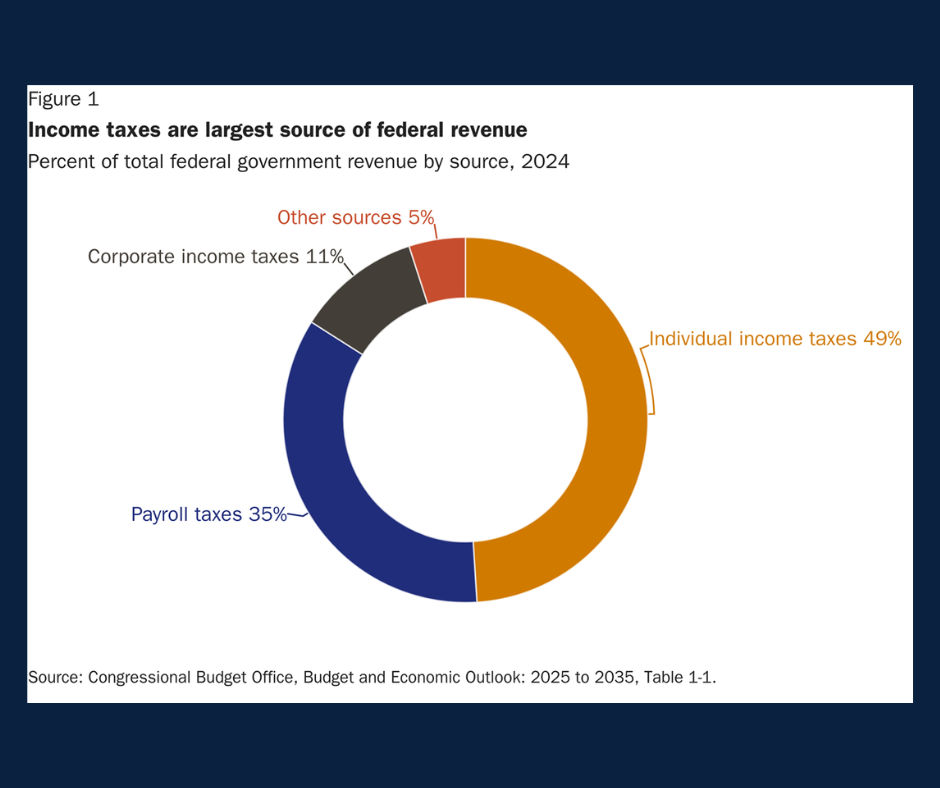
With tax season officially upon us, today's Chart of the Day from Liberty Taxed gives us an idea of the projected federal tax revenue over the coming years.
Individual income taxes remain the largest source of federal revenue, making up 49% of total government receipts. Payroll taxes—primarily used to fund Social Security and Medicare—account for another 35%, while corporate income taxes contribute 11% and all other sources combined make up the remaining 5%.
Together, these categories show the relative balance of U.S. federal revenue streams and the extent to which the government relies on individual taxpayers compared with businesses and other smaller revenue sources.
Gregory is an experienced financial manager specializing in investment holdings for individuals, trusts, IRAs, private foundations, and nonprofit organizations across Florida. A Mercy College graduate with a degree in government, he began his career in technology before transitioning to financial management in 2009.
Investments are not a deposit or other obligation of, or guaranteed by, the bank, are not FDIC insured, not insured by any federal government agency, and are subject to investment risks, including possible loss of principal.