
Housing Slump
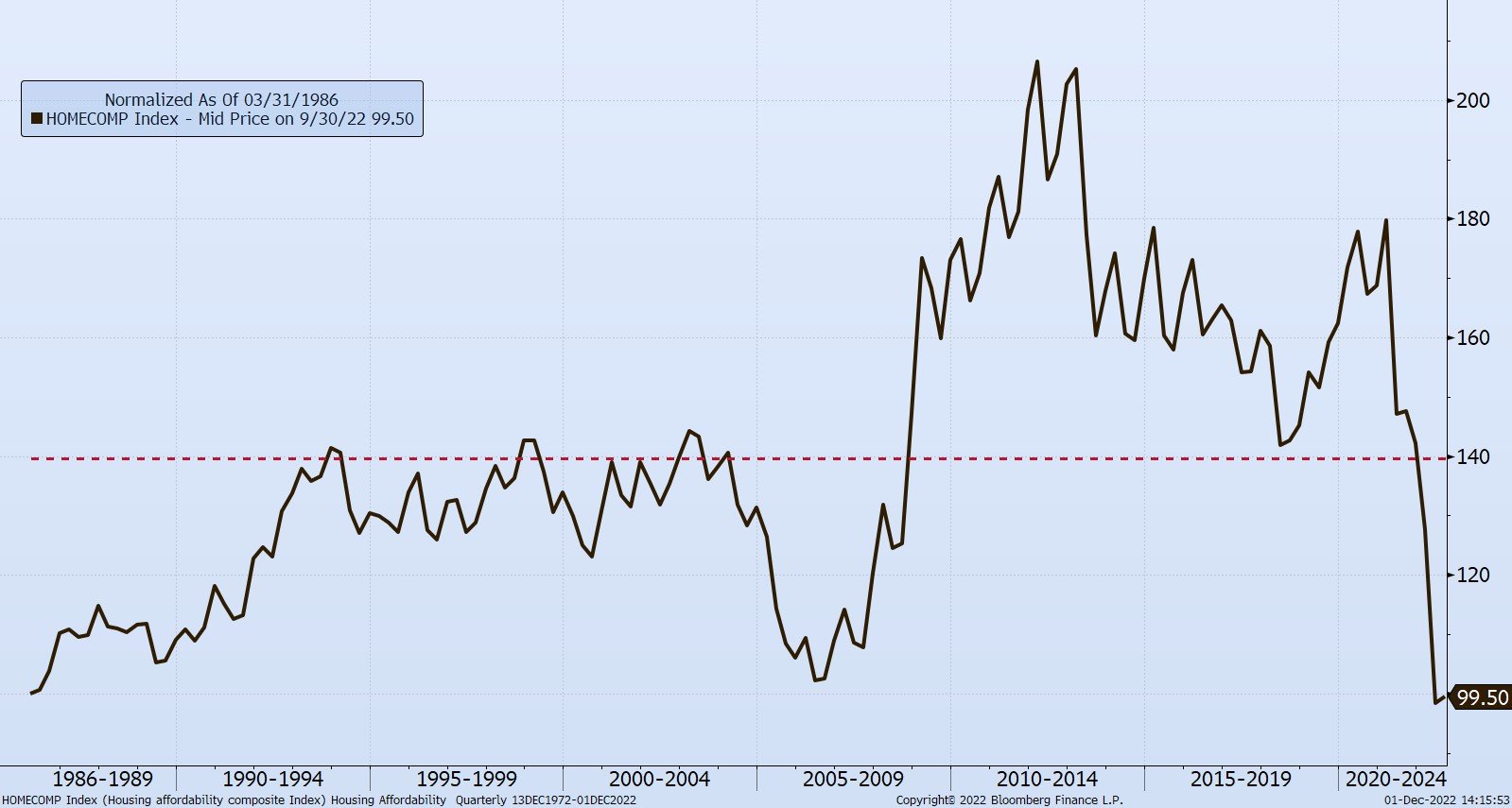
Today’s chart comes from data provided by the Department of Housing and Development (HUD) which shows that the rate of new US home sales per month has fallen 50% from 1,000,000 to 500,00 since the peak in August 2020.
Be financially ready for hurricane season. Access funds when you need them with a Home Equity Line of Credit (HELOC). Loans subject to credit approval. NMLS #406389
FDIC-Insured - Backed by the full faith and credit of the U.S. Government
BankFind
This bank is insured by the Federal Deposit Insurance Corporation. The FDIC Certificate ID is 8021. Click on the Certificate ID # to confirm this bank's FDIC coverage using the FDIC's BankFind tool.
EDIE
EDIE lets consumers and bankers know, on a per-bank basis, how the insurance rules and limits apply to a depositor's accounts-what's insured and what portion (if any) exceeds coverage limits at that bank. Check your deposit insurance coverage >>
Today’s chart comes from data provided by the Department of Housing and Development (HUD) which shows that the rate of new US home sales per month..
We’ve all seen them. They scream at us. We’re just minding our own business admiring cute cat videos as we scroll and they ruin it. Those..
You made it to retirement! Now what? How do you plan to pay all the expenses you’ll have for the rest of your life? This can be a daunting task. Many..
Today's chart is from Bloomberg Intelligence, which shows the money flows into ESG (Environmental, Social, and Governance) ETFs since they appeared..
People may ask, “Why not use hedge funds?” Today's chart comes from Bloomberg and shows us the reason why. In addition to their typical expense ratio..
Today's chart comes from OneDigital and shows that the average return for 20-years ending in 2015 was 8.2% for the S&P 500, while the average..
The following chart from Brian Ferdoldi shows the ultra long-term history of real returns from various asset classes dating back to 1802. Real..
Today's chart comes from LPL Research and shows the growth of company earnings since 1950. When you buy a stock fund you are purchasing the steam of..
Today's Chart of the Day is a Bloomberg chart of the U.S. Median Existing Home Price provided by the National Association of Realtors going all the..
Today's chart is from Ben Carlson’s “A Wealth of Common Sense” which shows the S&P 500’s rolling returns for 3, 10, 20, and 30 year periods going all..
Today’s Chart of the Day comes again from Vanguard. The best and worst trading days are often very close. Usually, when there is a large swing one..
Today’s chart comes from Vanguard. They wrote a great short article on the difficulties of market timing. In a nutshell, "from 1928 through 2021,..
When asked to predict where the market will be at year end, here are my thoughts:
The two Charts of the Day are from Michael Kitces and show the value of a $100,000 portfolio of 60% stocks and 40% bonds after 30 years with a 4% and..
A balloon payment is a lump sum payment that is significantly larger than the monthly payments and paid at the end of a loan’s term. Unlike loans..
Today’s chart comes from data provided by the Department of Housing and Development (HUD) which shows that the rate of new US home sales per month has fallen 50% from 1,000,000 to 500,00 since the peak in August 2020.
We’ve all seen them. They scream at us. We’re just minding our own business admiring cute cat videos as we scroll and they ruin it. Those fearmongering, anxiety-spiking headlines that desperately want you to click them, because, even though we’ve been here before, YOU haven’t been here before. And they know it.
Recession. It evokes plenty of negative emotions and fears on its own, but couple that with cleverly titled click-bait articles and they have you right where they want you – feeling dependent on whatever they’re selling so you don’t fall into financial ruin. Here’s a little PSA: The only one who can help you not only survive but thrive in a recession is YOU.
You made it to retirement! Now what?
How do you plan to pay all the expenses you’ll have for the rest of your life? This can be a daunting task. Many retirees simply open their monthly statements, check the balance, and hope that it’s enough. Hope is not a plan. Those with a plan will have better options and more choices regardless of what happens in the next twenty or thirty years. The outcome will be impacted by many known and unknown variables between the beginning and end. An effective retirement plan will require some time, effort, optimism, and a realistic view of the future. Most importantly, you’ll need to stick to the plan to make it effective and be prepared to adjust along the way. So, where to begin?
Today's chart is from Bloomberg Intelligence, which shows the money flows into ESG (Environmental, Social, and Governance) ETFs since they appeared in 2015.
People may ask, “Why not use hedge funds?” Today's chart comes from Bloomberg and shows us the reason why. In addition to their typical expense ratio of 2% and 20% of gains above a benchmark, hedge funds have consistently underperformed the stock market, denoted by the S&P 500 index, every year since 2014. In fact, they haven’t performed well since their heydays in the 1980s, and even less so since 2007.
Today's chart comes from OneDigital and shows that the average return for 20-years ending in 2015 was 8.2% for the S&P 500, while the average investor only earned 2.1%. The hypothesis is: Too many investors stop investing when the market is down and/or try to time the market.
The following chart from Brian Ferdoldi shows the ultra long-term history of real returns from various asset classes dating back to 1802. Real returns, the returns after inflation, are important to know due to inflation’s elevated levels.
Today's chart comes from LPL Research and shows the growth of company earnings since 1950. When you buy a stock fund you are purchasing the steam of their combined future earnings. Yes, that stream can temporarily decline during recessions, but over time the economy and that stream of earnings returns and continues to grow.
Today's Chart of the Day is a Bloomberg chart of the U.S. Median Existing Home Price provided by the National Association of Realtors going all the way back to 1999.
Today's chart is from Ben Carlson’s “A Wealth of Common Sense” which shows the S&P 500’s rolling returns for 3, 10, 20, and 30 year periods going all the way back to 1926.
Today’s Chart of the Day comes again from Vanguard. The best and worst trading days are often very close. Usually, when there is a large swing one way, more often than not, the next day swings in the opposite direction. This is why we often do not get too excited when it happens. In fact, when cash needs to be invested or raised for spending, these are usually great days to do so.
Vanguard proved this with today's chart.
Today’s chart comes from Vanguard. They wrote a great short article on the difficulties of market timing. In a nutshell, "from 1928 through 2021, there were more than 23,300 trading days in the U.S. stock market. Out of those, the 30 best trading days accounted for almost half of the market’s return."
When asked to predict where the market will be at year end, here are my thoughts:
The two Charts of the Day are from Michael Kitces and show the value of a $100,000 portfolio of 60% stocks and 40% bonds after 30 years with a 4% and 5% initial withdrawal rate. These comments come from Rich Emch, CFP®, Senior Trust Officer.
A balloon payment is a lump sum payment that is significantly larger than the monthly payments and paid at the end of a loan’s term. Unlike loans that have a series of fixed payments to pay off the balance of the loan, a loan that includes a balloon payment is made up of lower fixed payments and a final larger payment.
current_page_num+2: 37 -